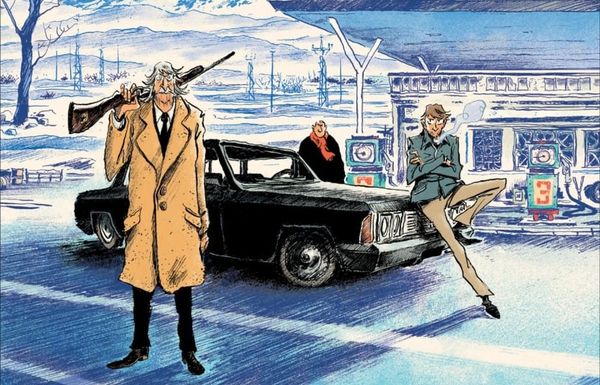
Bring Me The Head of Silvio Silvermane-- thoughts on Nick Spencer and Steve Lieber's The Superior Foes of Spider-Man
Nick Spencer and Steve Lieber don’t portray these guys as villains. If anything, these criminals are working-class stiffs, maybe one step up from being a henchman.

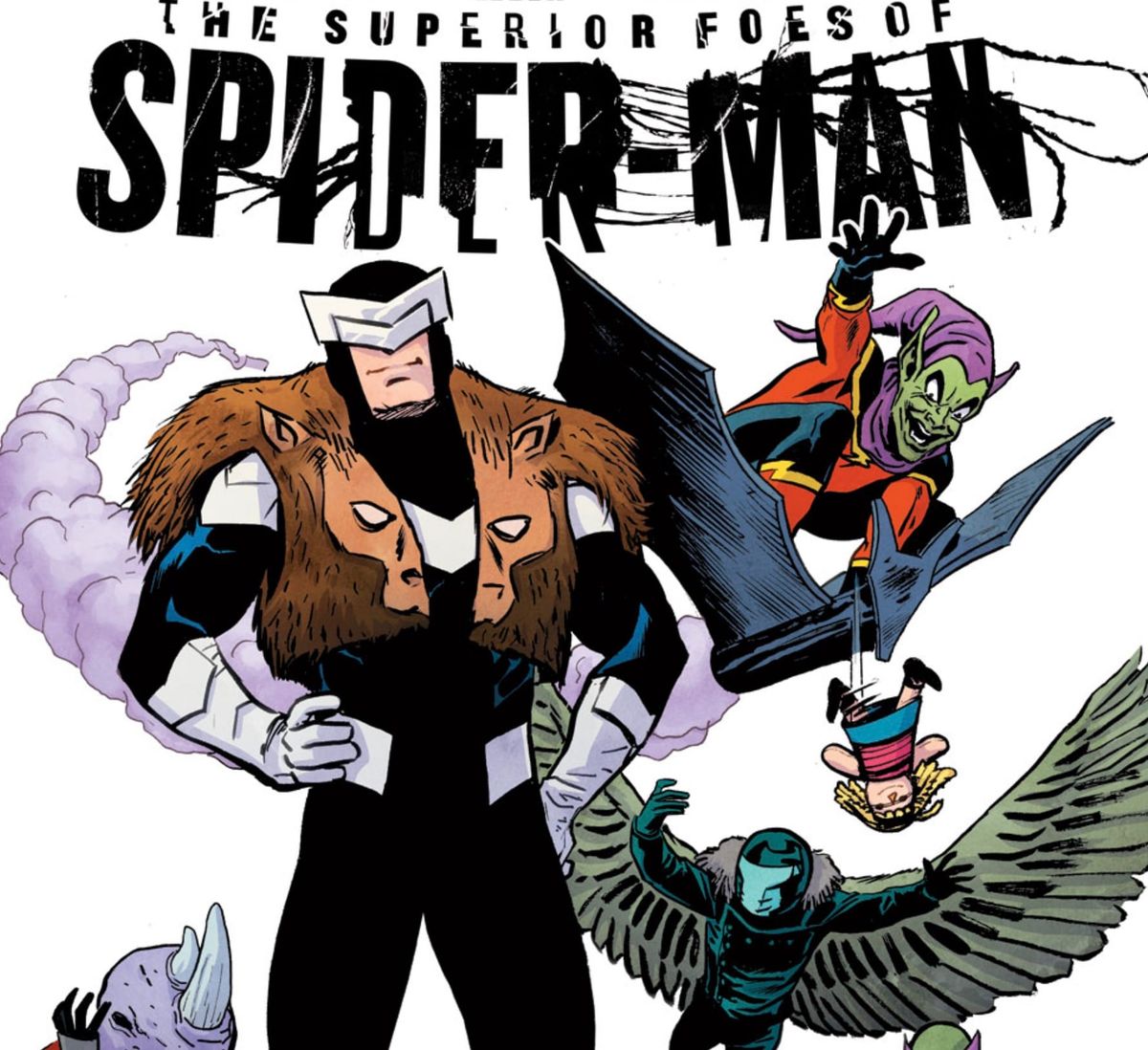
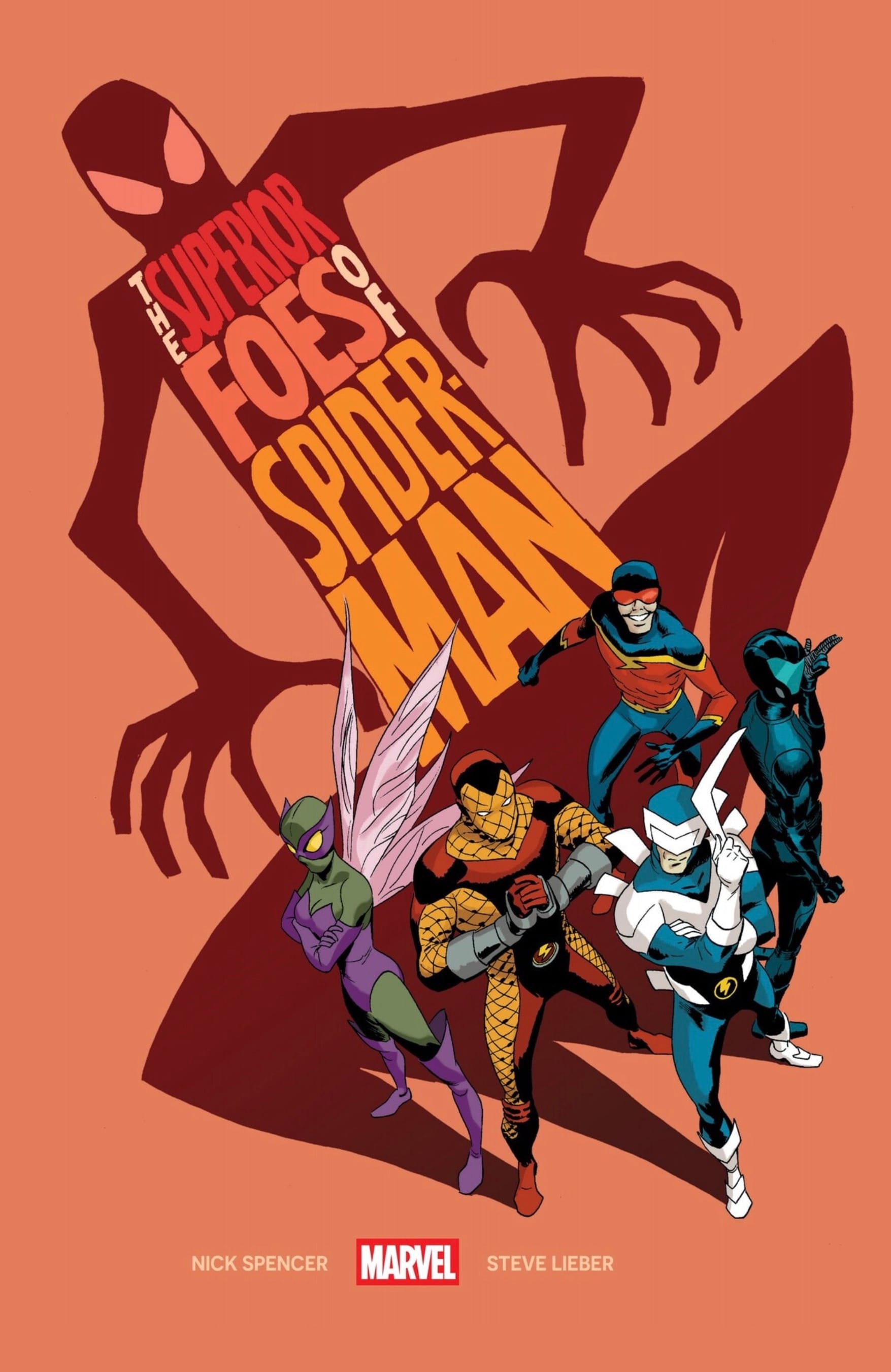
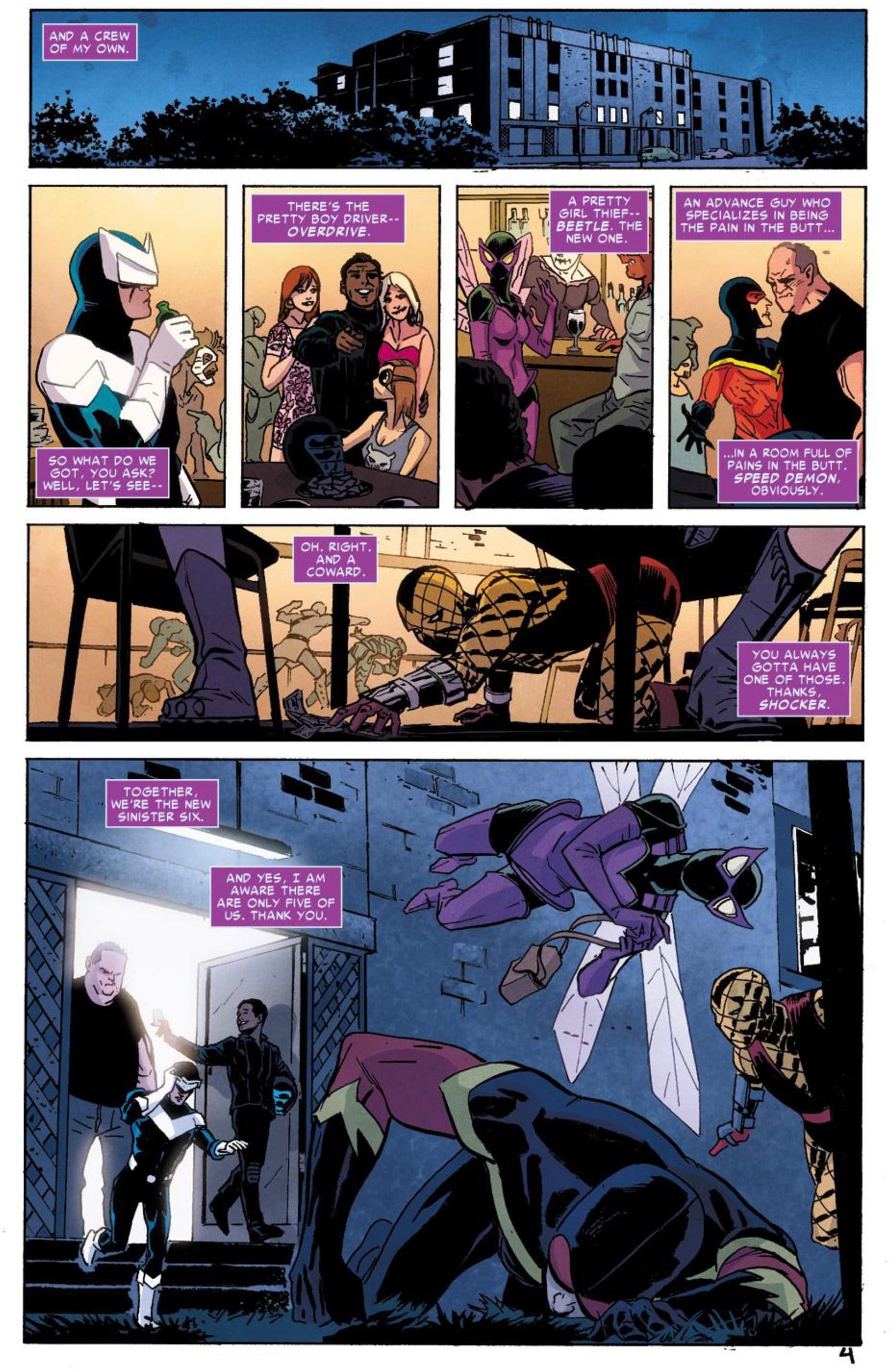
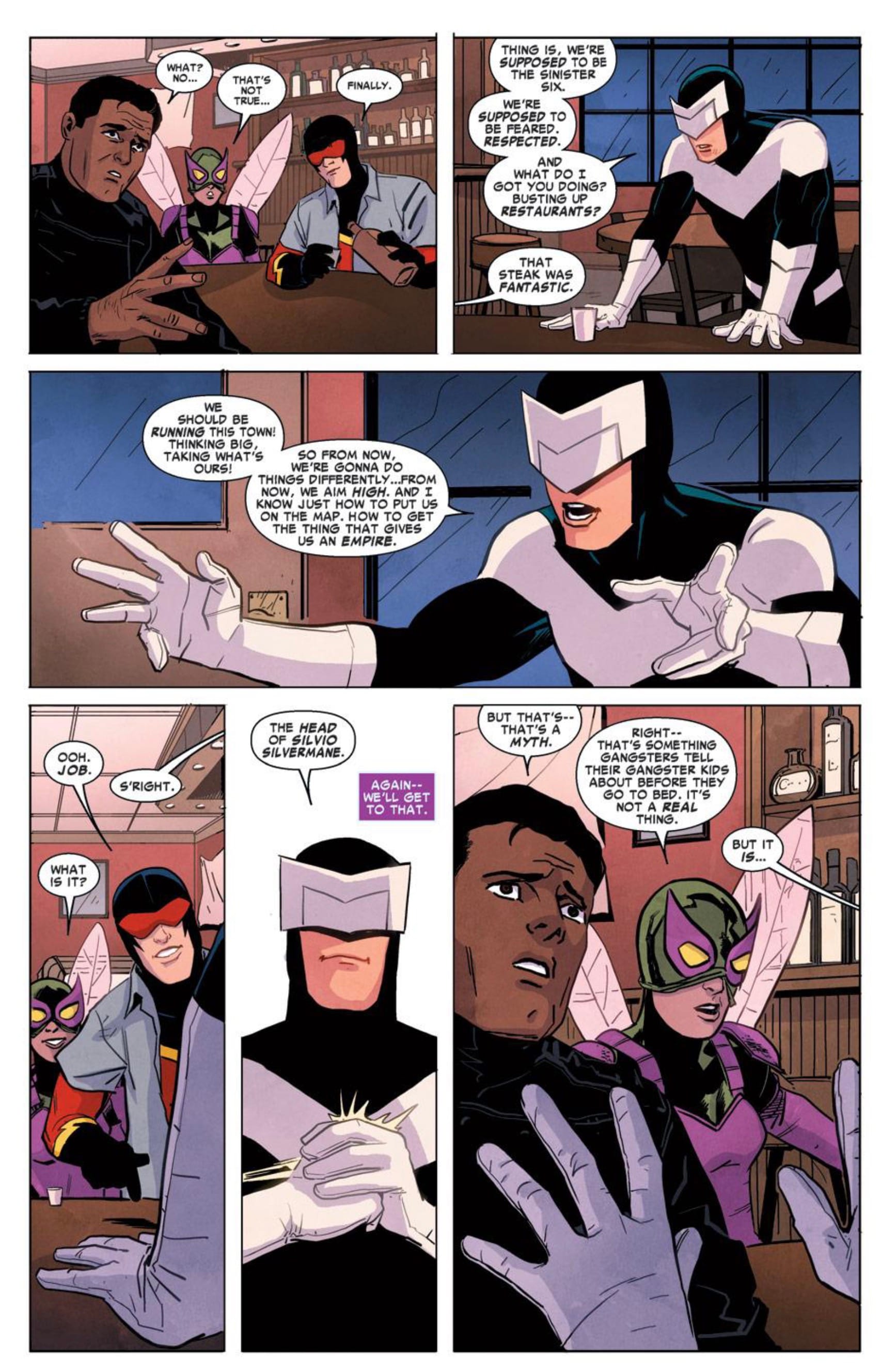
When you think about Spider-Man’s superior foes, what villains come to mind? Green Goblin obviously. Doctor Octopus has to be up there. Kraven and the Vulture are pantheonic foes. Maybe even Sandman. How about Speed Demon? Beetle? Shocker? Overdrive? If not them, how about Boomerang? (Wait, is he even a Spider-Man villain— the guy with the boomerangs? That’s really his whole deal.) Yet Boomerang is the leader of the latest incarnation of the Sinister Six, a villainous team that once was made up of Spider-Man’s biggest foes. In Nick Spencer and Steve Lieber’s The Superior Foes of Spider-Man (originally published in 2013 and recently republished in 2026), the Sinister Six has been reduced to only five members, as just one example of how far the concept of the villainous team has fallen. Instead of plotting ways to defeat Spider-Man, their latest attempted heist is to steal the cybernetic head of former Maggia crime family boss Silvermane from The Owl because they read somewhere online that whoever has the head of Silvermane will be the new head of the Maggia crime syndicate in NYC. Or maybe they are trying to find a secret portrait of Doctor Doom, the only one ever painted to show his true face. Or maybe (and it’s more likely,) they don’t know what they’re doing even as they follow Boomerang’s lead, knowing that they’re probably going to get screwed over. Honor among thieves and all of that stuff.
Heist stories are rarely about the heist— they are stories of the men and women trying to pull off the heist. The modern model for these kinds of stories is Steven Soderbergh’s Ocean’s 11, where Danny Ocean leads a crew to rip off not 1 but 3 Las Vegas casinos. The mission to rob the casinos is the skeleton of the story— it provides the plot necessary to get the characters where they need to be, from point A to point B and conclude at point C. The story is really about what Danny Ocean wants— his wife back— and how the other members of his crew react to finding that out. The story is about a man trying to show the love of his life that the person she’s with now is no good. This is how each of Soderberg’s Ocean’s films work— there’s the heist (or the plot), and then there are the characters’ stories. When the heist becomes the story (my memory is fuzzy here, but that feels like what happened a bit with the attempted Ocean’s 8 reboot), the whole thing falls apart because there are no real characters in the tale.
There aren’t too many actual heist stories in comics. There are stories about a hero stopping the bad guys from pulling off a job; those are hero stories about being a good guy, not about being the stiff who has to pull off one more job. That’s probably because there aren’t too many comics focused on the criminals among us. (Although as a product of its time, this is ostensibly a spinoff of The Superior Spider-Man, a comic showing Doctor Octopus taking over Spider-Man’s body for a period of time and kind of being a hero, but that series was not about a criminal only being a criminal.) Spencer and Lieber’s Superior Foes of Spider-Man fills that gap, giving us a story showcasing a group of thieves trying to steal something or another.
That something or another brings this crew together to give them a purpose, a shared goal that makes them a team. It really doesn't matter what those targets are; they’re MacGuffins dangled in front of their eyes by Boomerang to simply lead them on. He never expects them to really find the head of Silvermane or Doctor Doom’s unmasked portrait. Those are legends that the underworld tells itself to think they could one day be rich or run a crime family. It shows how easily manipulated the members of the Sinister Six are when Boomerang could seem to be a criminal mastermind. It allows them to also be dirty, mean, and ugly once they start to realize the truth. It allows them to be human in ways that the big iconic villains can’t be.
Spencer and Lieber don’t portray these guys as villains. They’re not out to defeat Spider-Man or try to take over the world. Their motivations are actually somewhat more pure than that, making them far more relatable. If anything, these criminals are working-class stiffs, maybe one step up from being a henchman. At one point, Shocker reminds Boomerang that he enjoyed being a henchman and could go back to being that if the current plan doesn’t work out. They just want to successfully pull off a job and grab a beer at the end of the day. If they get rich hitting the right jackpot, that’s icing on the cake. For the most part, they want to get through today and have it be a bit better than yesterday was. That’s the American dream.
This cast isn’t treated like they are merely villains; it explores them as actual characters with their own agency. They’re not only gimmicks designed to foil the hero. Spencer gives each of them their own motivations. Overdrive sees being a criminal as a step towards becoming a reformed hero (similar to Mach VII, the original Beetle, who ends up being Boomerang’s parole officer in this story). The current Beetle wants to follow in her father’s footsteps, daddy’s little girl; her father just happens to be the criminal Tombstone. Shocker wants to be in a group of friends, to be a decent guy and a good friend. Speed Demon is the guy who wants to screw the system. And Boomerang has his own motivations, similar to Danny Ocean organizing the casino heists to get to his ex-wife.
The Superior Foes of Spider-Man taps into some of that old J.M. DeMatteis and Keith Giffen Justice League magic with the way it brings an irreverent tone to the story. It doesn’t take itself too seriously; Spencer and Lieber know that this is more than a joke book— there are people’s lives that they’re telling the story of. It’s blaw-ha-ha funny, but there is a heart to this story about friendship and what it means to be part of a team. Everyone sees themselves as the hero, but this group is at least self-aware enough to know that they are not superheroes. They’re who we’re rooting for from almost the first page of the story because there’s a balance of humor, warmth, and adventure in this story that DeMatteis and Giffen trailblazed years ago that almost no one has been able to replicate until now.
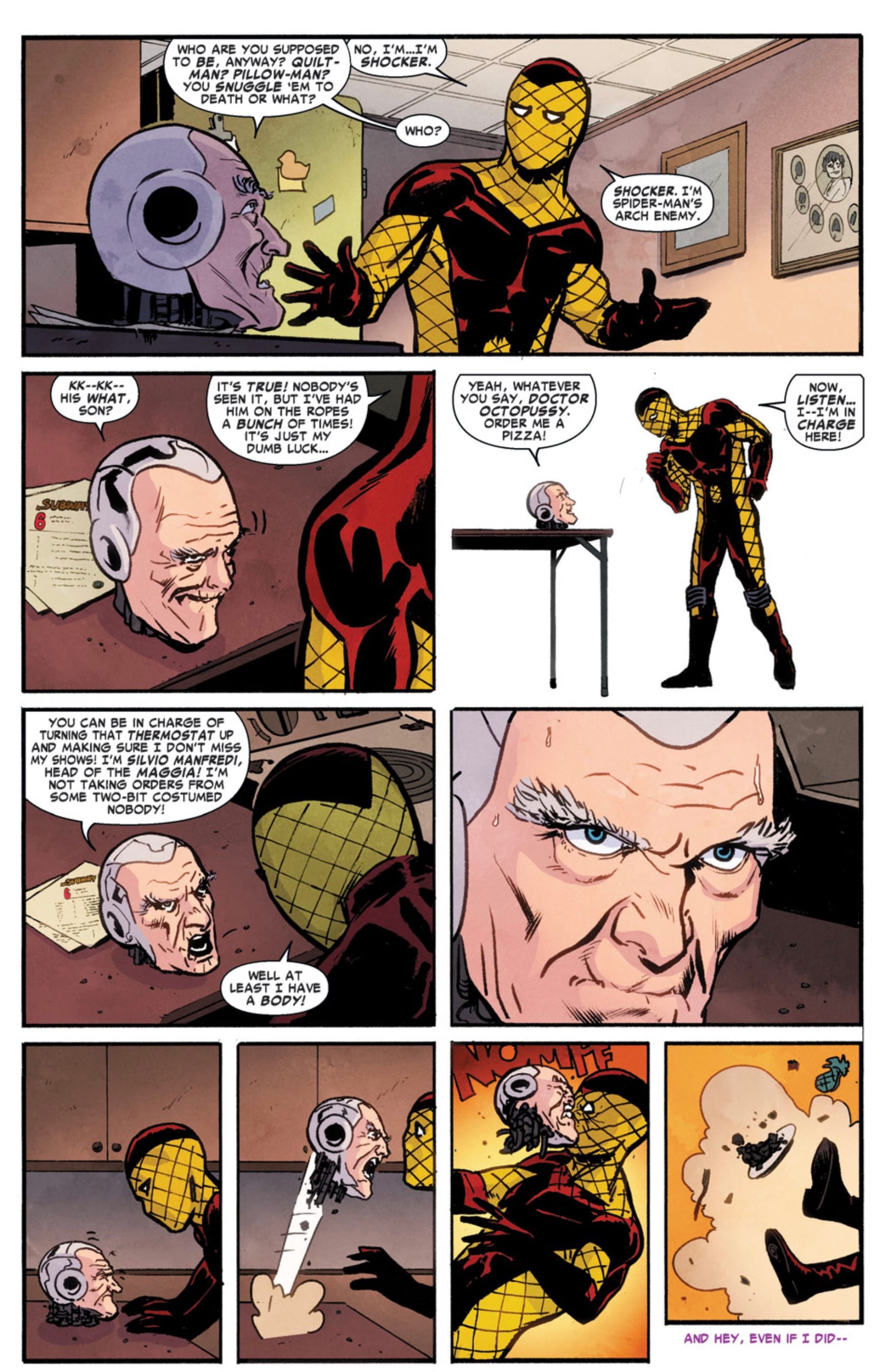
Lieber’s storytelling grounds the humanity of the story. Even if they may be criminals wearing silly costumes (Silvermane compares Shocker’s costume to a quilt), Lieber expresses the humanity of everyone in the book— they’re not serious people, but they’re also not silly. Through his artwork, Lieber brings out the value of the characters. The Shocker is a bit of a loser in this book, not seeing the double crosses coming or constantly being belittled by a severed cybernetic head. Lieber doesn’t draw him as a loser. He’s dejected and confused, but he’s not a one-note joke in the story. There’s range to all of these characters that makes them multi-dimensional. When Lieber does get to draw a joke, he indulges in slapstick humor that is always in service of the characters’ stories.
Boomerang is the team leader and the de facto lead of the story. He’s also trying to pull something over on everyone, including the reader. He’s the ultimate unreliable narrator. He’s not a good guy; he’s clearly a villain, but Spencer and Lieber still kind of get us to root for this guy. Or at least, we root for his success, just not at the expense of his teammates. It’s a tightrope that Spencer and Lieber are walking, getting us to root for Boomerang as well as his teammates, even when their goals aren’t completely aligned. Boomerang lacks the charm of a Danny Ocean but not the conniving nature. He has his plans, and no one is going to get in the way of those plans.
In many ways, The Superior Foes of Spider-Man is a perfect airport book— it’s a story that you can pick up almost on a whim and get sucked into these people’s costumed lives. Nick Spencer and Steve Lieber turn what could have been a joke book (5 costumed criminals walk into a bar…) into a fun exploration of what it is to be a C-list (at best) villain, a working-class stiff who’s not bent on world domination and wants today to be a bit better than what yesterday was. That’s what the heist actually is in this story— not an object or riches but trying to wrestle a bit of control away from the crimelords who suck all of the oxygen out of the room. The Sinister Six (the sixth member was the friends we made along the way) may be rejects, but Spencer and Lieber see that there’s more to them underneath the spandex masks to explore. They get to be the heroes of their story even as they pursue their criminal dreams.