Breathing In Darcy Van Poelgeest & Ian Bertram's The Karman Blade #1
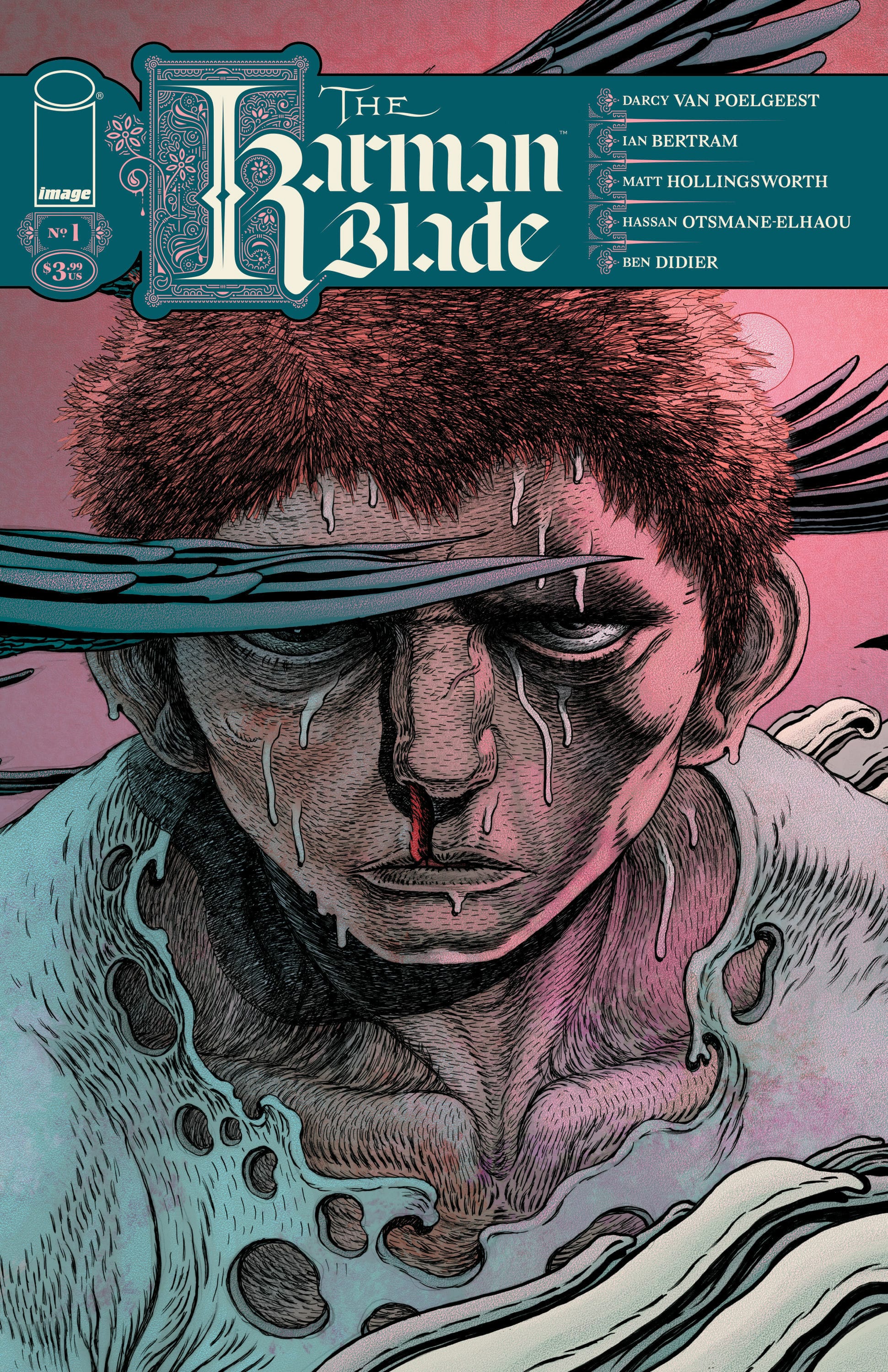
The Karman Blade #1 isn’t just a comic that you read; it’s a comic that you breathe in. It clings and scratches your throat. It claws at your skin and pecks away at your eyes.

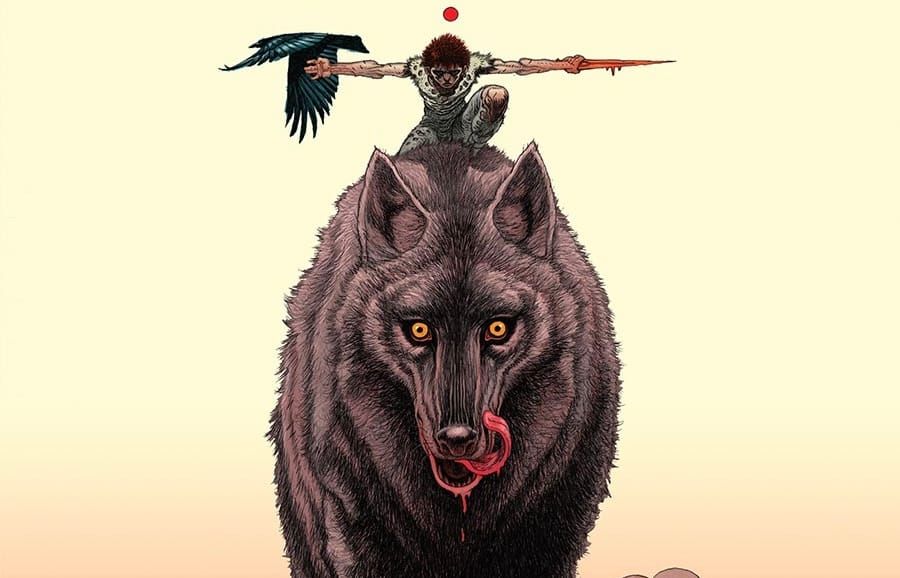
The Karman Blade #1 isn’t a book that you read— it’s a story that you live through. That means that it isn’t some kind of semi-passive reading experience. It isn’t a story that Ian Bertram, Darcy Van Poelgeest, Matt Hollingsworth, and Hassan Othman-Elhaou are just telling you. If you want to be told a story, there are plenty of those comics out on the shelves and many of them are really good. But The Karman Blade #1 is something else. Sure, there is a story here of Anatta burying his family, being taken captive by a horde, and having visions telling him that he’s the one destined to kill god. That’s quite a setup for a first issue.
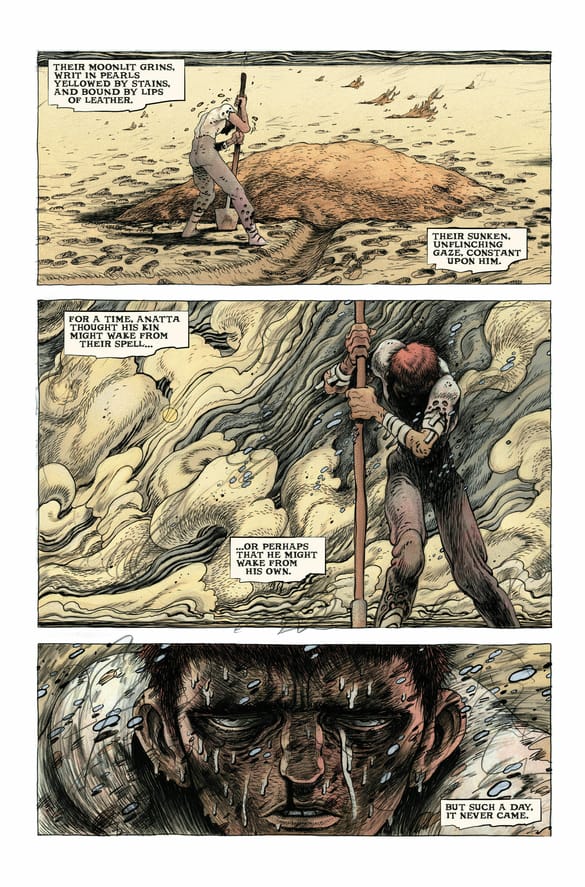
Van Poelgeest’s writing, taken by itself, functions more as a guide in this comic, leading us (the audience) and Anatta through this strange world. He’s shaping a new mythology and is taking us along on Anatta’s hero’s journey. He takes us through the confusion and disorientation of being swept up into a world that Anatta doesn’t understand. Van Poelgeest’s narrative framework shows us the tough world Anatta lives in. The writing is almost utilitarian, providing a structure for the true way that we will “read” this comic.
Starting with that structure, Bertram, Hollingsworth, and Otsmane-Elhauo take us to another world… “world” is just too small to describe the work that they do. Visually, The Karman Blade is the most ambitious book to land on your reading pile in quite a long time. Bertram’s images aren’t just telling a story— they’re shaping a new reality, a feverish nightmare of unimaginable creations. Only they are imaginable for Bertram. It’s the way he fills the thick, swirling, dusty skies in the beginning of the story or draws the ratty clothes Anatta pictures his parents wearing that shows us that we’re not in any kind of world or even existence that we already know. And those are just a couple of examples of Bertram’s imagination at work, an infectious imagination that has so much more to show us.
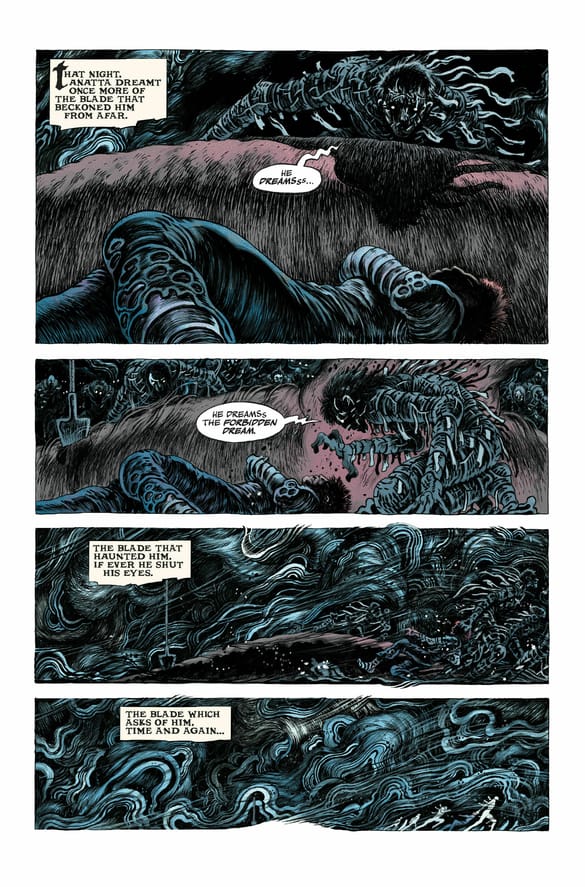
That infection surges throughout the writing, the coloring, and the lettering. All of these elements of the comic swirl around Bertram’s work. Van Poelgeest’s writing feeds off of what Bertram does, giving Van Poelgeest the room to go even farther and wilder with the story. Hollingsworth’s colors feel like something you breathe in, and it’s not an easy breath. It’s a dusty, dry breath most of the time. The atmosphere he creates around Anatta helps us experience so much of what the character is going through. Otsmane-Elhauo’s lettering designs move us through these environments— words sound different depending on the space around us and we get to live through the different spaces of this comic and hear them in different ways.
The Karman Blade #1 isn’t just a comic that you read; it’s a comic that you breathe in. It clings and scratches your throat. It claws at your skin and pecks away at your eyes. It’s trying to break you down. If you thought you knew what Darcy Van Poelgeest and Ian Bertram could do after Little Bird or Precious Metal, you’ll quickly realize that you were not prepared for what they are doing in The Karman Blade.
Thank you for reading From Cover to Cover.
Click here to receive new posts in your email and support our work through a tip at Ko-Fi.