Teddy Bear, Sociopath, or Both-- thoughts on Patrick Horvath's Beneath The Trees Where Nobody Sees: Rites of Spring
If Samantha Strong was the underdog of the first book, in Rites of Spring she’s the disease that has lain dormant in this town for years but is now itching to break confinement.
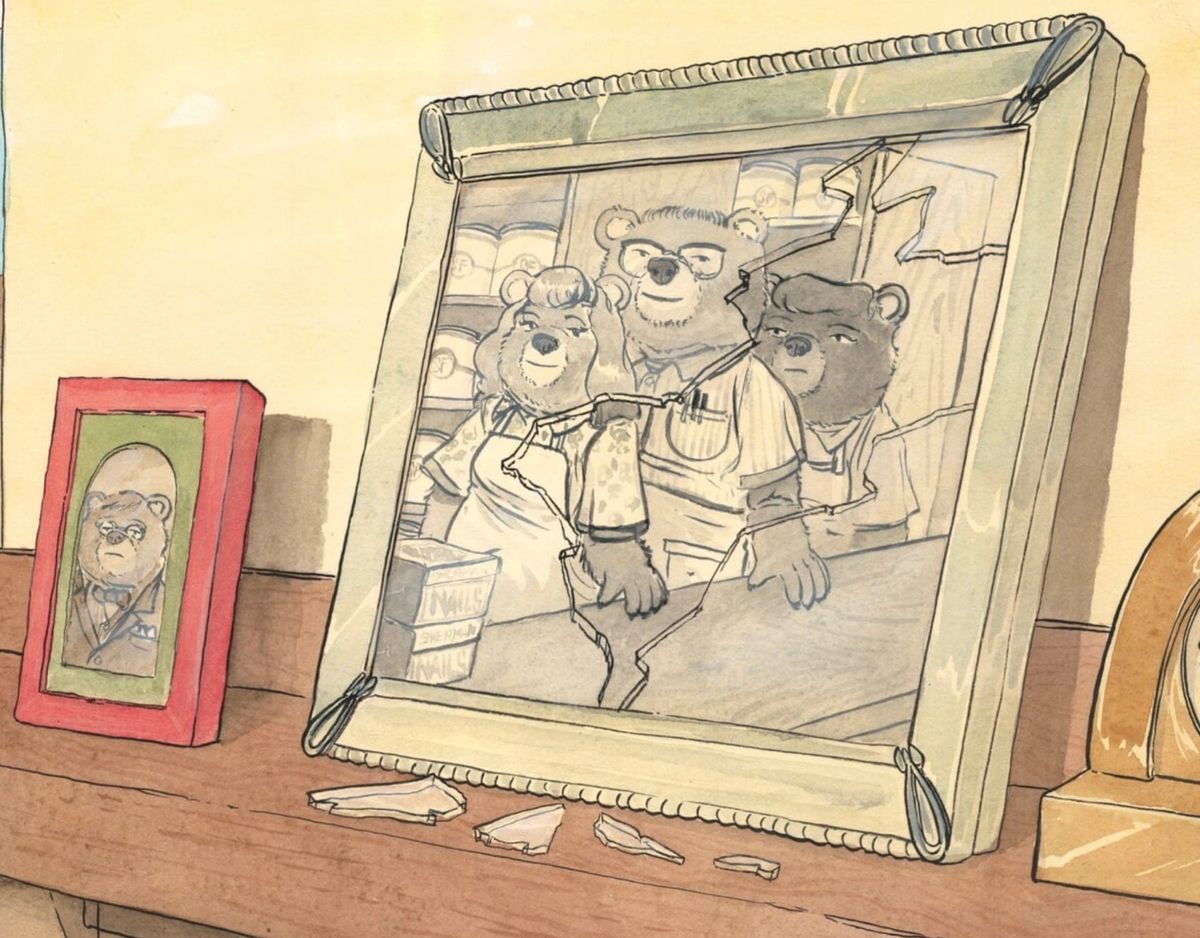
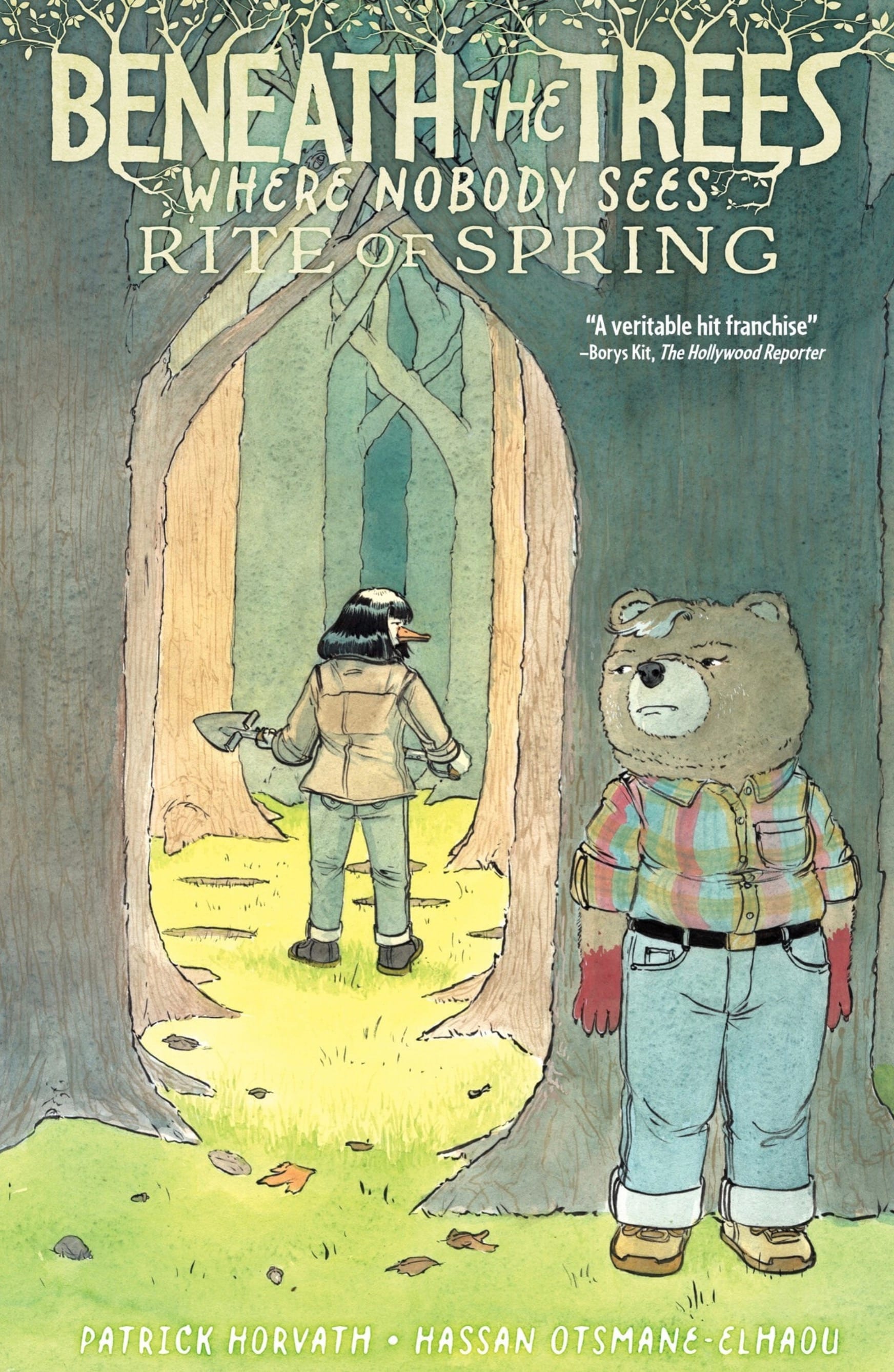
Beneath the Trees Where Nobody Sees looks like a Build-A-Bear comic, something that IDW would license to be their next big thing. They’ve done My Pretty Pony, so why not create a mythology around the shopping-mall-based stuffed animals that you can dress up in whatever outfit, uniform, or costume you want? If that was all that Patrick Horvath was doing, our imaginary Build-A-Bear comic would be one of the best-looking books on the comic stands. I’m not even too sure what the story would be (maybe some kind of riff on “sharing is caring”) but Horvath’s depictions of stuffed animals could be a great story about the diversity of mankind— all of these different animals living in the town of Woodbrook, VA in a peaceful unity. Horvath’s very first issue back in 2023, which introduced Samantha Strong as the friendly proprietor of a local hardware store, opened with an idyllic fantasy of small-town life that lasted only a few pages before Horvath turned everything upside down.
Samantha turned out to be a serial killer living right there in that little town, a teddy bear in a flannel shirt. Sam perfectly illustrated the dichotomy between what we were reading and what we were seeing— a Thomas Harris book illustrated by Richard Scary. Horvath tapped into the desire for innocence among the repulsive acts committed by his main character. Samantha was a monster who was living at the center of Americana purity. With Horvath’s second book, Beneath The Trees Where Nobody Sees: Rites of Spring, Horvath takes the horror to a new level as we learn just how much of a sociopath Sam really is. In the first book, she was arguably the protagonist as her safe life was threatened by another serial killer moving into her town. In this new book, Sam is clearly the villain here and not in the “every villain is the hero of their story” kind of way. If she was the underdog of the first book, in Rites of Spring she’s the disease that has lain dormant in this town for years but is now itching to break confinement.
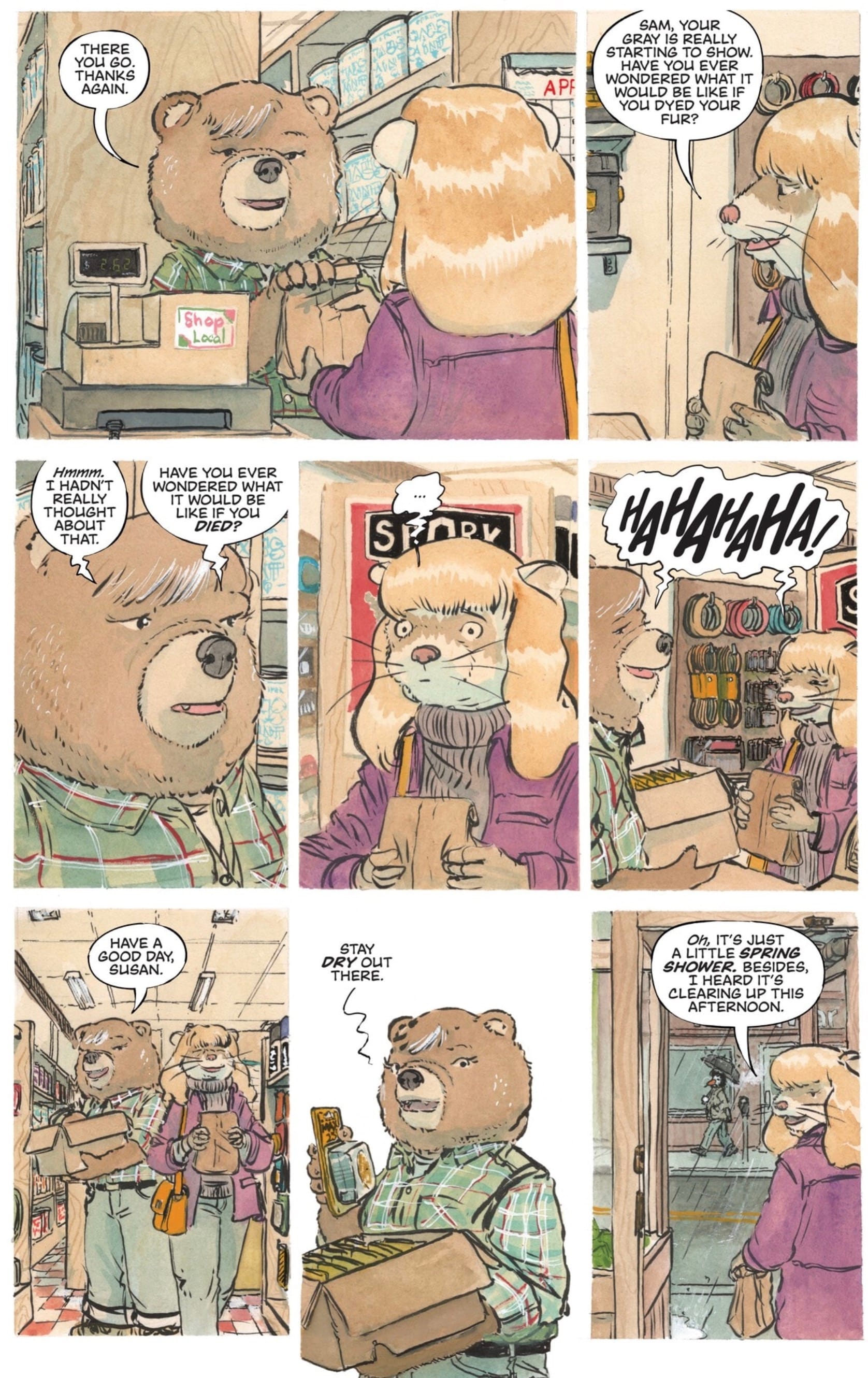
Going into this new book, the shock value of the stuffed animal aesthetic has come and gone. This could be another funny animal story (is “funny animal horror” a legitimate genre yet?) So Horvath goes in the opposite direction, leaning more into the psychology of a killer. Picking up 8 years later and set during the early days of the internet (when it used to come in your mail on physical CDs,) Sam is still in her small town, still serial killing, and still keeping it on the down low. But the killing is not enough as Sam finds a new thrill— playing with her victims before she kills them. In an online chat room, she finds Monica, the sister of one of her victims, looking to find out what happened to her brother. Sam dangles just enough clues in front of her to entice Monica to do things that would have been unimaginable to her before this. It is thrilling for Sam but also careless as she starts taking chances that she never would have before.
As we see Sam starting to break her own rules, Horvath also takes us back to some of Sam’s earliest killings. He doesn’t try to explain the whys behind Sam’s psychology because maybe there are none. Even without the psychological exploration, we get a view into Sam’s mind, the ways the wheels turn in there, and the steely methodology she employs. It’s chilling to watch a younger Sam learning about the hardware business from her father, her mind connecting how basic household tools and supplies could become the tools of her true calling. It doesn’t even feel like Sam is evil— she’s just wired differently than everyone else and that’s even more frightening than if she were something like the devil incarnate, or a personification of evil. Instead, she’s a part of this town and it’s part of her.
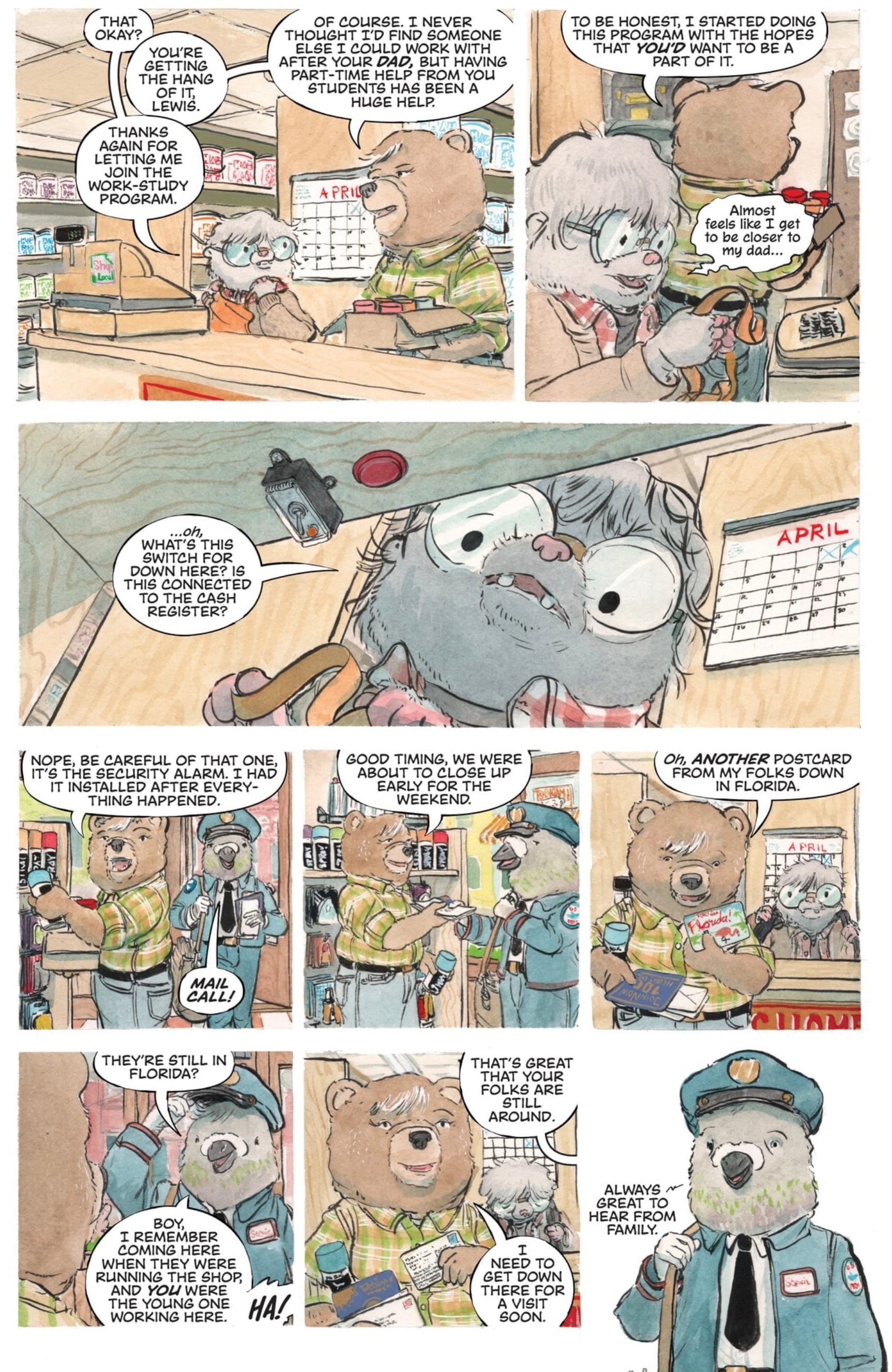
If the stuffed animal look isn’t a shock anymore, it still gives these characters an innocence that human characters wouldn’t be capable of. Are animals even capable of sin? Even Sam looks like a cuddly toy animal. Ultimately, we don’t read Sam as a bear or Monica as a goose or any of the other characters as the animal they are (with the possible exception of the turtle who’s capable of retreating into his shell when frightened.) This isn’t Art Spiegelman’s Maus where the type of animal those characters were related to their nationality and role in World War II. The animals they are aren’t their story but they are part of their character. Sam is a bear in that there’s always the potential for danger with her. Horvath uses the animal nature on a more individual level to show us character and temperament rather than role in the story. He matches these characters with an animal that reflects their sounds and personalities. Turtles, moles, geese, birds, and koala bears give us insight into these characters that we wouldn’t get if they appeared as human as you or I.
We’ve already seen behind the masks that were in the first Behind The Trees Where Nobody Sees book. From that story, we had an incomplete notion of who Samantha Strong was. We knew her actions and Horvath uses those acts to peel back how Sam was perceived by the town around her. In Behind the Trees Where Nobody Sees: Rites of Spring, Horvath starts diving into what we know and don’t know about Sam. We find out so much more about her but still realize that we’re only seeing a glimpse of her mind and soul. The funny animal look & feel of this book masks a much darker and more invasive sickness at the heart of Americana.
Thank you for reading From Cover to Cover.
Click here to receive new posts in your email and support our work through a tip at Ko-Fi.