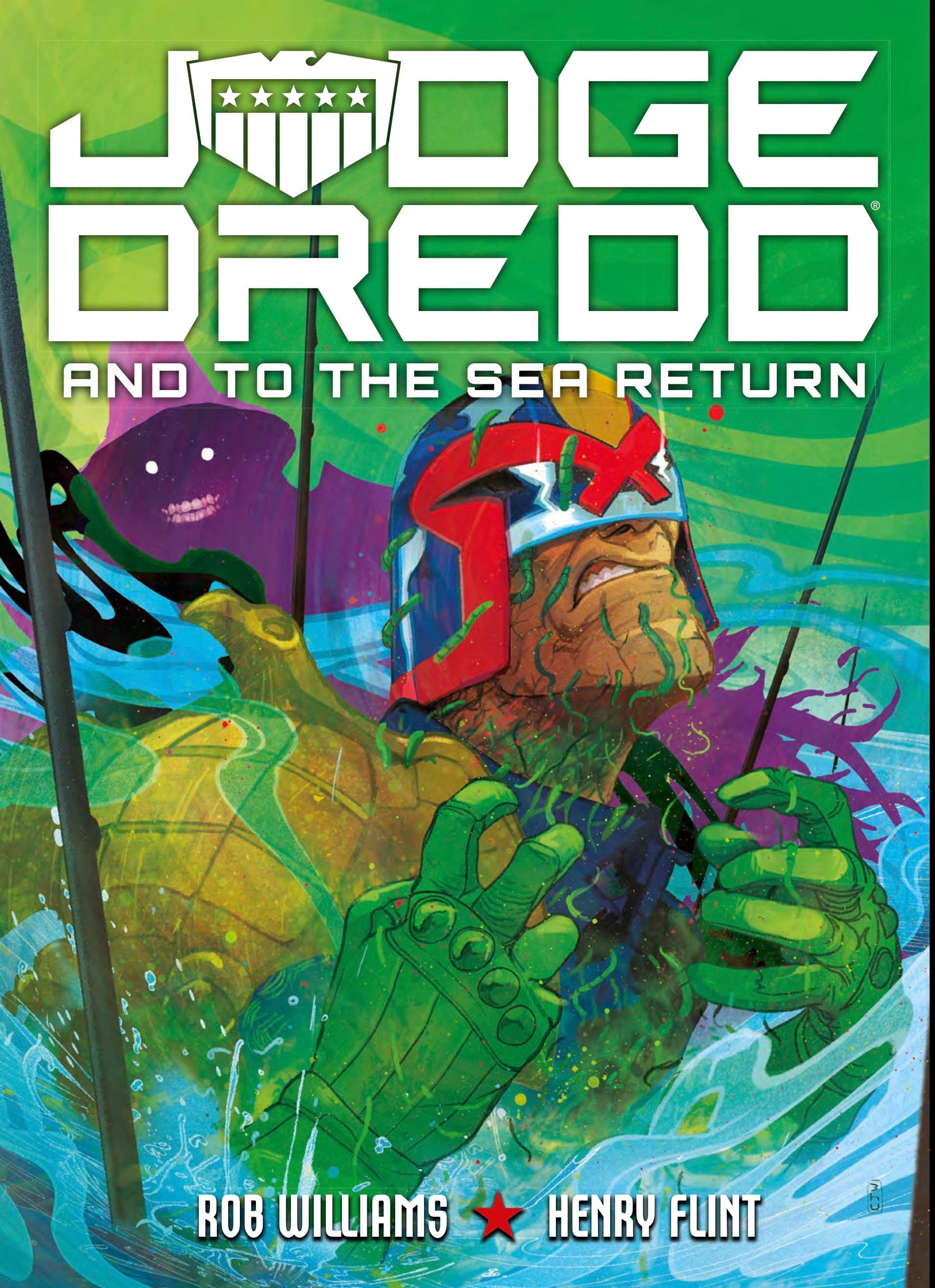
Breathe in the Sickness of Rob Williams & Henry Flint's Judge Dredd: And To The Sea Return
These comics kick you, stab you with a rusty blade, and then try to gouge your eyes out. And you love every second of it.

The opening page of Judge Dredd: And to the Sea Return tells you everything you need to know about the first story in this book (the first story shares the name with the book’s title) even if you’ve never read a Judge Dredd story before. Rob Williams and Henry Flint expertly set the tone for this story in these 15 images. The top tier of panels shows that there is something unhealthy at the core of this story; the ashen colors tell you that right away. The first two images look like any other establishing shot of a sky after a storm, the dark clouds rolling away to reveal a clear sky behind them but all is not right in the second panel. In a small detail, just above the horizon line, you can see something that is a peaked hue of green coming into the image. It increases over a couple of panels. Then you see something, a ship (?), on the distant horizon and you realize that these images that almost appear static have actually been dynamic, moving subtly through space and time. Flint has been slowly pulling us into the horizon to the point where that green mist fills the entire sky. “The mist rolled in lazy and greedy across the black Atlantic” the caption tells us just in case you can’t read that in Flint’s more evocative staging of these images.
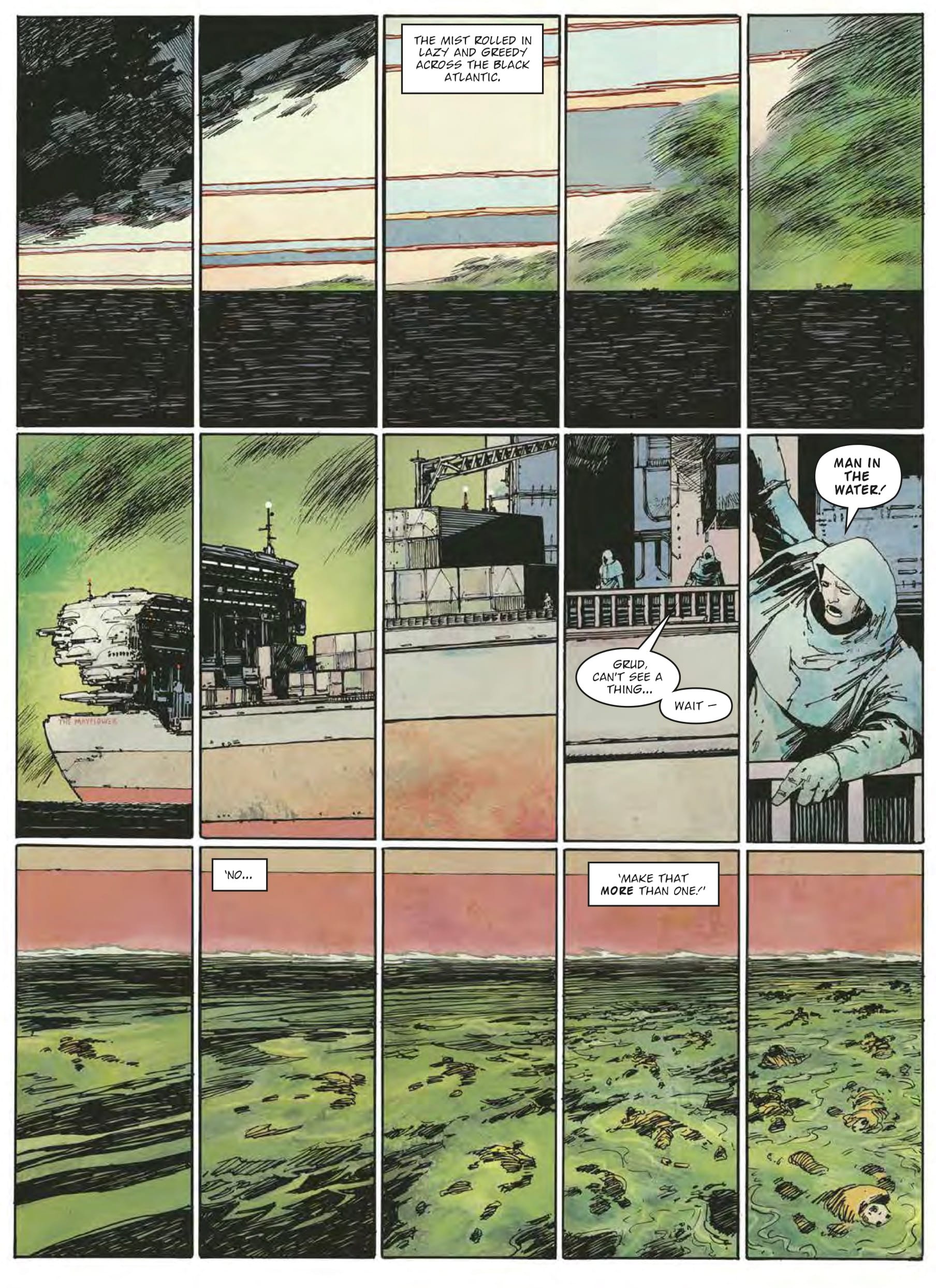
The second tier of panels moves closer to the horizon, narrowing in on a cargo ship that’s sailing the ocean. The first three panels of the sequence are silent, almost deathly silent as the green sky nearly fills all the space in the image that isn’t the ship. The silence is ominous. In real life, the ocean is never silent; there would at least be the sound of the waves lapping at the ship’s hull but Williams and Flint are so careful on this page about how they invoke sound with the minimal dialogue that you imagine everything else is unnaturally silent, as if the mist is overpowering everything else including the sound of the wind or the water. The muted colors of the boat and the seamen add to the landscape's dreaded feeling, the queasy moments before full seasickness hits your gut. “Man in the water!” one of the sailors yells!
The third tier of panels somewhat echoes the first tier as we pan down to the waterline; we see something in the water, still having that sinking feeling in our guts as it dawns on us why we’re feeling that way. Similar to the first tier, the bottom tier could have been a single long image instead of five. Then we would have read it as a single moment in time. The shock of this sequence would have been immediate as Flint could have just shown it as a simple pan down to the water to see the bodies of the man in the water. Instead, it’s broken into five panels, each one a bit more horrific than the last as one body in the water becomes two in the next image, then four, and then more than you can count. Introducing the element of time here introduces the creepy feeling that we haven’t seen all of the horrors that Williams and Flint are getting ready to dive into in this story.
This opening page introduces two key elements for this story— the sickly green mist and the sense of dread (not Dredd, who won’t show up until the last panel of page 2) that is the soul of this story. This first page is the beginning of the roadmap for “And To The Sea Return.” Even without a Judge showing up, Flint tells you what kind of story this is going to be. Each page in this story, which really ends up being an Atlantic coast small town horror story, ramps up from page 1, upping the horror & the dread with each new sequence. The first page establishes the visual foundation of the story. There is a physicality of time and space in the story, a dimensional and bodily force that transcends the limitation of the comic page.
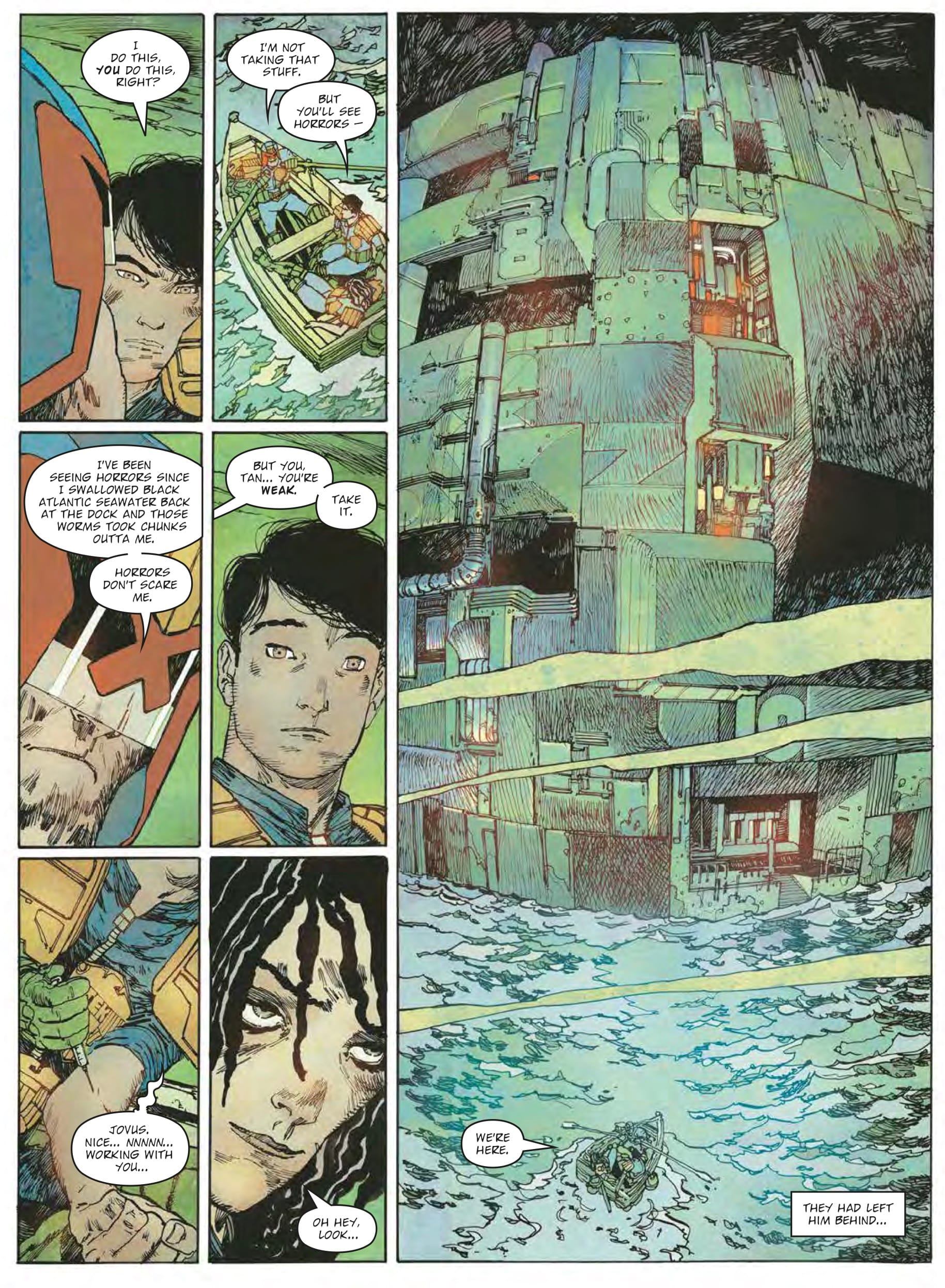
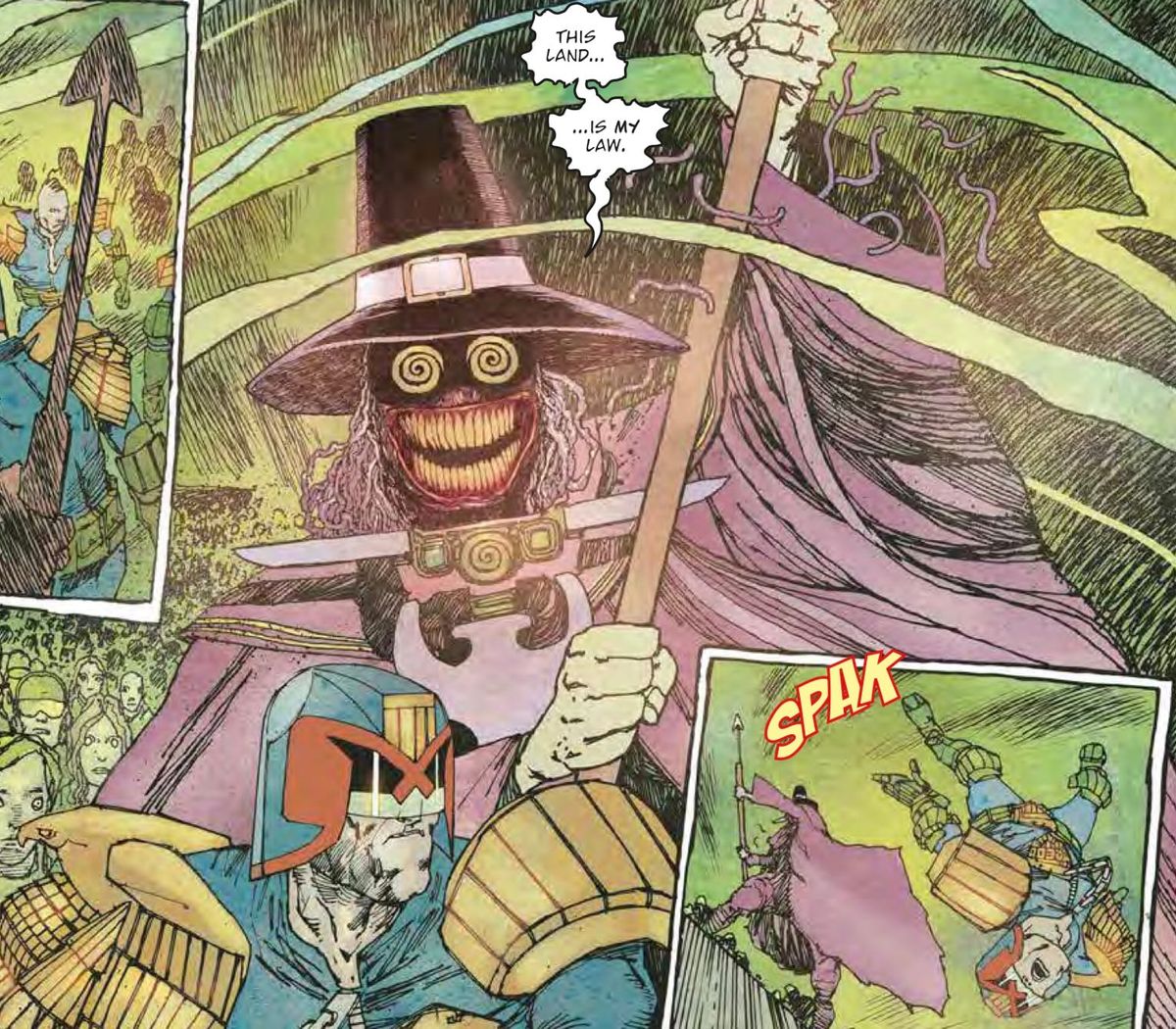
As Judge Dredd, Judge Anderson, and other Judges are dispatched to investigate what’s happening, the story becomes something like a John Carpenter or H.P. Lovecraft horror story, combining a horrific environment with creepy, threatening creatures. Williams and Flint turn that horror into the lead of the story. Everyone knows who and what Judge Dredd is; he’s a fairly flat character in that the stories aren’t so much about him. No lesson or growth is happening to that character over the course of a single story. The emotional focus of the story needs to come from someplace external to Judge Dredd. So the horror has to become the center of the story and other Judges really become the characters we follow to see how they act and react. In the case of this story, there are two Judges- Tan and Hurst. Tan is a Judge who investigates the fog and the bodies with Dredd while Hurst is the Judge of the Sector House right in the middle of everything. It’s in these two characters that we see the cost and the effects of the horrors.
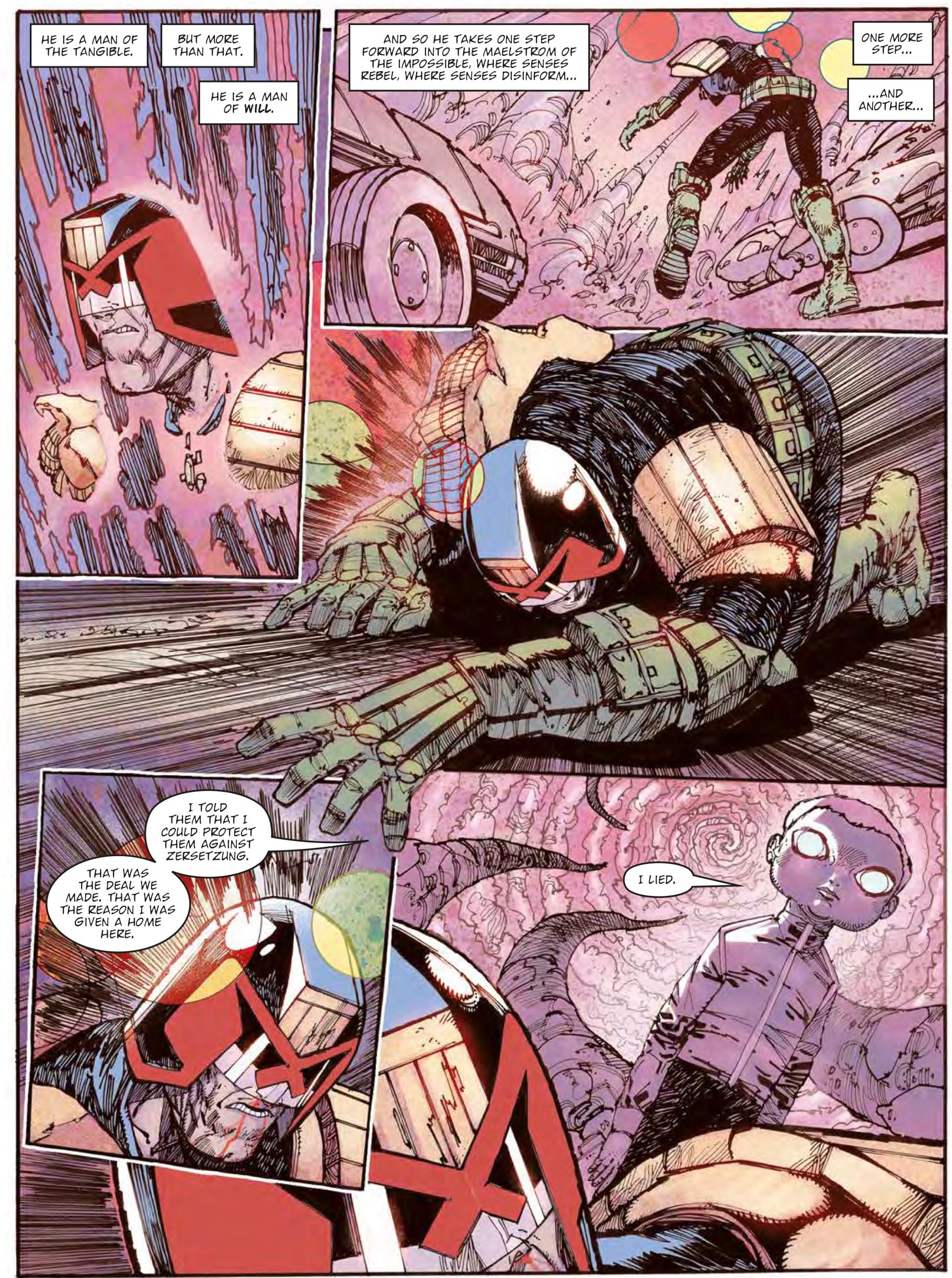
There’s a second story in this book, “Buratino Must Die.” This one is from a few years before “And To The Sea Return,” and isn’t quite the horror story that the first tale is. It’s more of an action thriller as Judge Dredd and Judge Anderson have to handle a threat that the Judges welcomed into their headquarters. It’s less visceral than the first story but Flint’s artwork is still all about creating a disorientating environment. It’s more of a Dredd story in that he has to clean up a situation that he saw coming even if others wanted to ignore it. It belongs to a continuity that the first story is largely independent from but it stands on its own, a testament to how Williams and Flint can bring you into this world that’s already in motion.
Common to both of these stories is the way that Flint visually envelops you in these horrors. Reading both tales, you’re in these environments, pummeled by the same creatures, forces, and evil that Dredd is fighting against. These are comics that beat you up. The environment is so all-encompassing that the action also envelops the reader and almost becomes a physical experience. You don’t just read these two Judge Dredd stories, you survive them. How many comics can you say that about? Williams’ stories are gut punches, dark and creepy tales, but it’s Flint’s artwork that knocks you out. That green mist rolling in on the first page is just the beginning of a book that starts uneasy— you know something is coming and that it isn’t good. From there, the art is doing everything and more that it can to drag you into this cruel and beaten world.