
Linus Liu Dreams Of A Long Lost Childhood in Cat Mask Boy
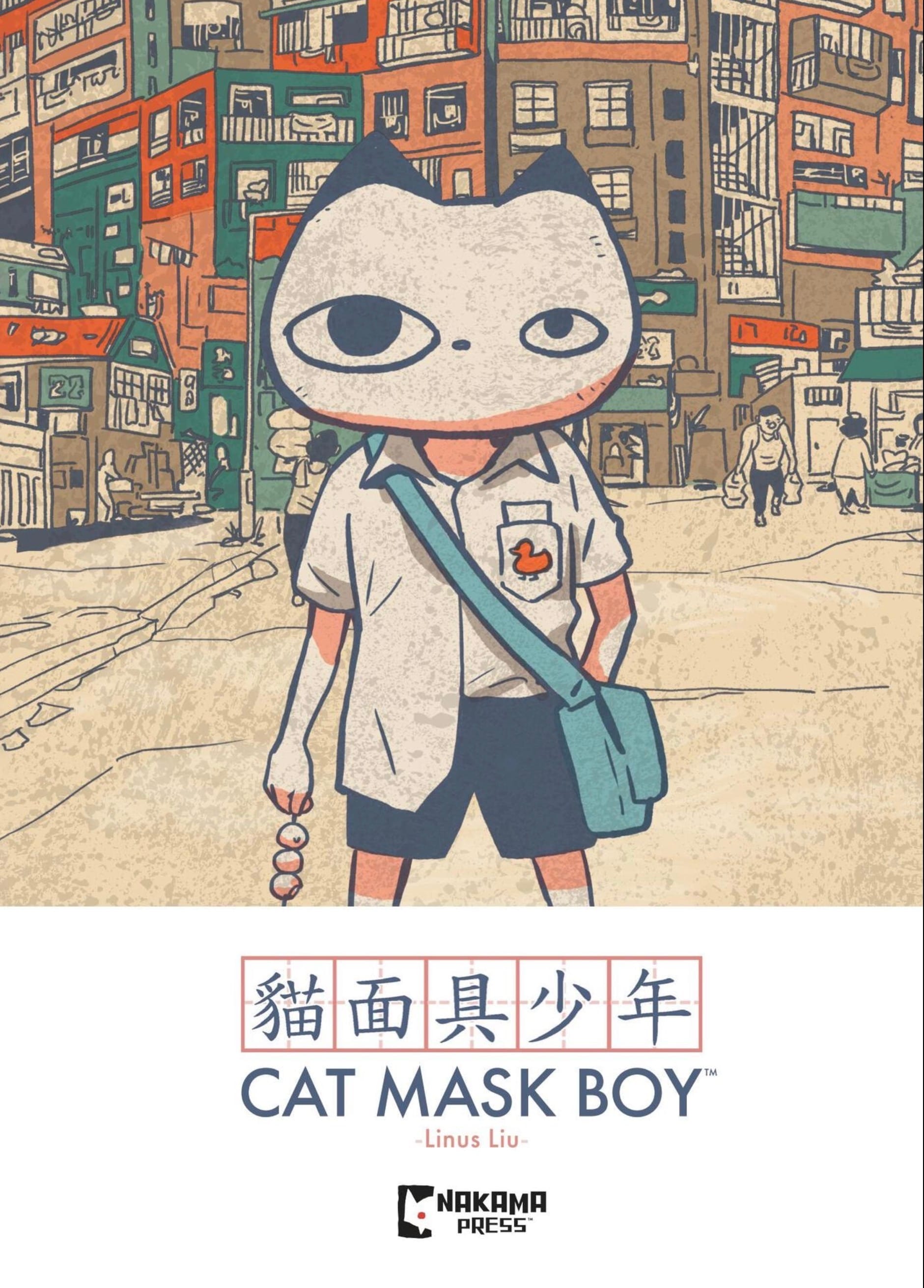
There were days during childhood that were full of endless possibility and that’s the nostalgia that Linus Liu is remembering here. Cat Mask Boy is the story of a simpler time, before every kid had a cellphone or a traveling sports team to keep them occupied.
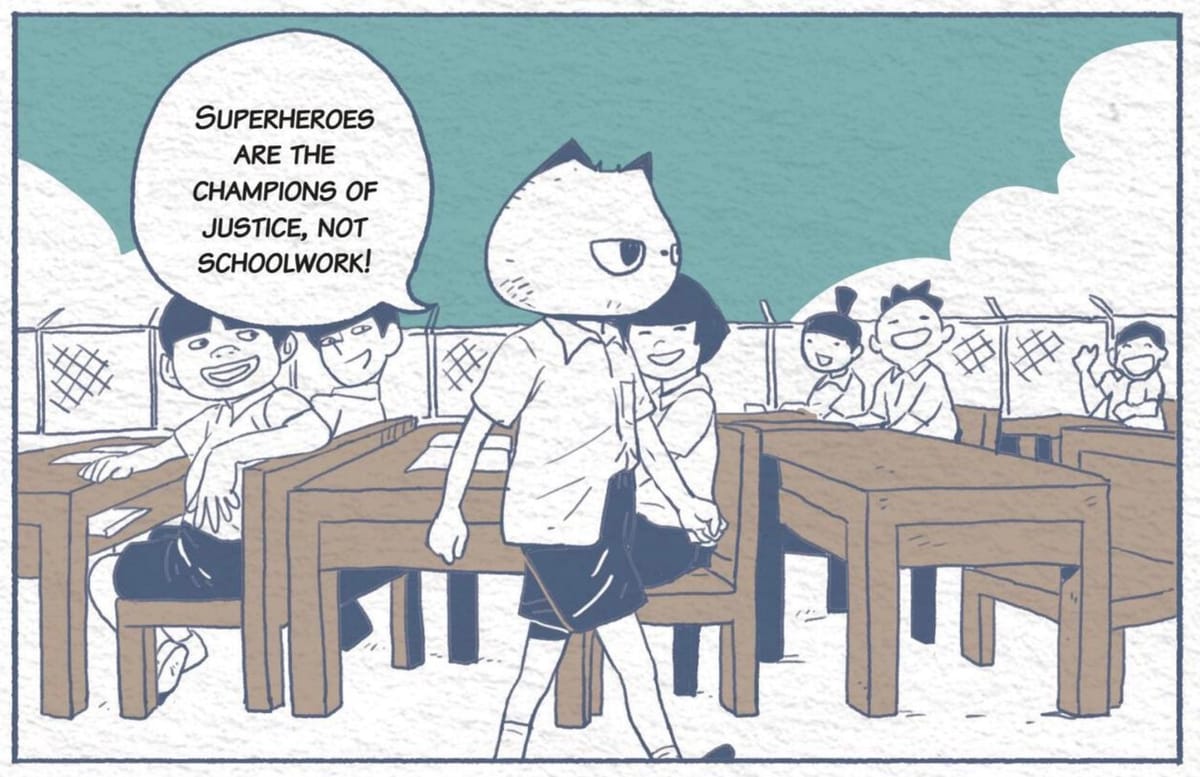
Linus Liu’s Cat Mask Boy is a relatively inconsequential story and that’s part of its charm. When given a class assignment to describe what his dream job would be when he grows up, seven-year-old Tiger shows up at school wearing a cat mask, telling his teacher and class that he wants to be a superhero. The class laughs and the teacher tells Tiger, “… there’s no such career as a superhero” and that he’ll need to redo his homework. Walking back to his desk, Tiger proudly proclaims, “Superheroes are the champions of justice, not schoolwork!” before slumping back down into his desk. It’s the defiance of a school kid who wants to hold onto a dream but is already fighting against a future that he doesn’t want.
When pushed, Tiger wants to be a kid who does good, does better. The Cat Mask Boy wants to do well in school to make his mom proud of him. So for him, it’s an accomplishment when he goes from worst in the class to just third worst. It’s an improvement that he’s proud of. Liu shows us a good kid who is a dreamer and doesn’t quite fit in with what everyone else thinks a “good” kid should be. They see a troublemaker or a loafer but Liu sees a kid who, for better or worse, dreams of being a hero. It’s a child’s dream and simple vision of the world but Liu’s Cat Mask Boy allows us to get lost in the purity and the innocence of that kind of unformed worldview.
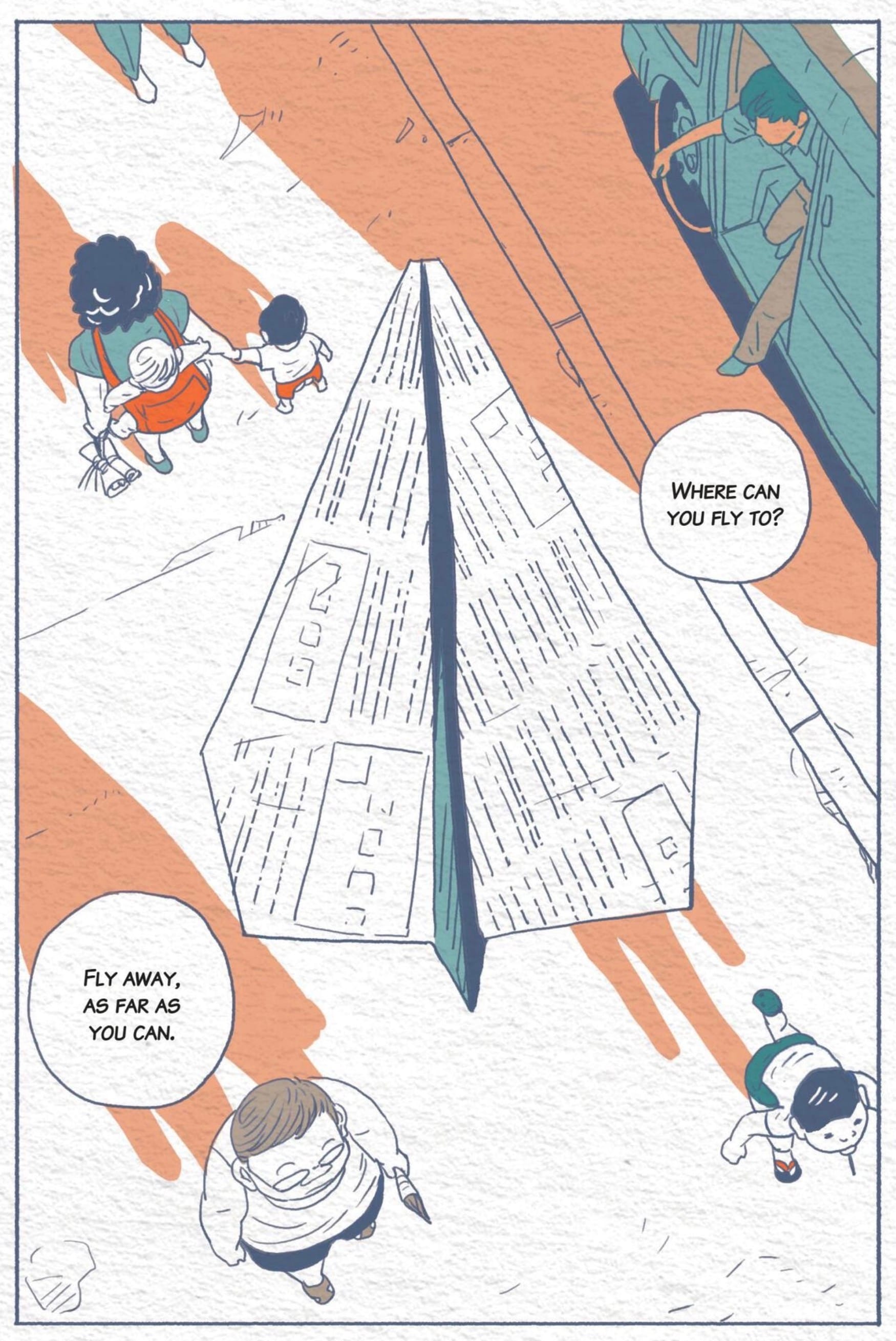
There are actually three boys with cat masks— Tiger, his friend Rocky who Tiger makes a mask to hide his parotitis, and the mysterious Dragon of Kowloon Walled City, whom Tiger encounters on a search for his missing report card. The three boys are very different but Liu finds ways to use each of them to explore this age where boys can just be boys with everything that comes with it. In many ways, there’s no planning to these boys’ days other than waking up in the morning and going to sleep at night. Everything else in between is just full of potential and possibility. Liu captures the aimless days of childhood, when days would start as one thing and end up being something completely different by the time they were over.
So on this day, Tiger wakes up for school and ends up in the rough’n’tumble Kowloon Walled City trying to find his report card which got swept up by a man and taken away. Tiger needs the report card to show his mother and his teacher that he’s responsible and capable of being better. Even though he’s only third worst in the class, that report card is a demonstration that he can be something more than everyone thinks he is. So all he has to do is go to school and go home. That’s what the day starts as but then it turns into something much darker and more dangerous as he has to enter a city where law doesn’t exist and he won’t get any leeway from the thieves and criminals just because he’s a kid.
Rocky and Dragon represent two very different future paths for Tiger. Rocky is the son of a shop owner, a quiet boy who follows the rules. His friendship with Tiger may be his one act of rebellion but Rocky is that “good” boy who lives within the rules and roles of society. Dragon is something different and unexpected. He lives within the lawlessness of the walled city so he could be the “bad” boy, the criminal who could lure Tiger over to the dark side. Dragon represents more the possibilities of who Tiger could be- the yin and yang shading of Dragon’s mask suggesting a harmony that’s not present in either of the other boys’ lives.
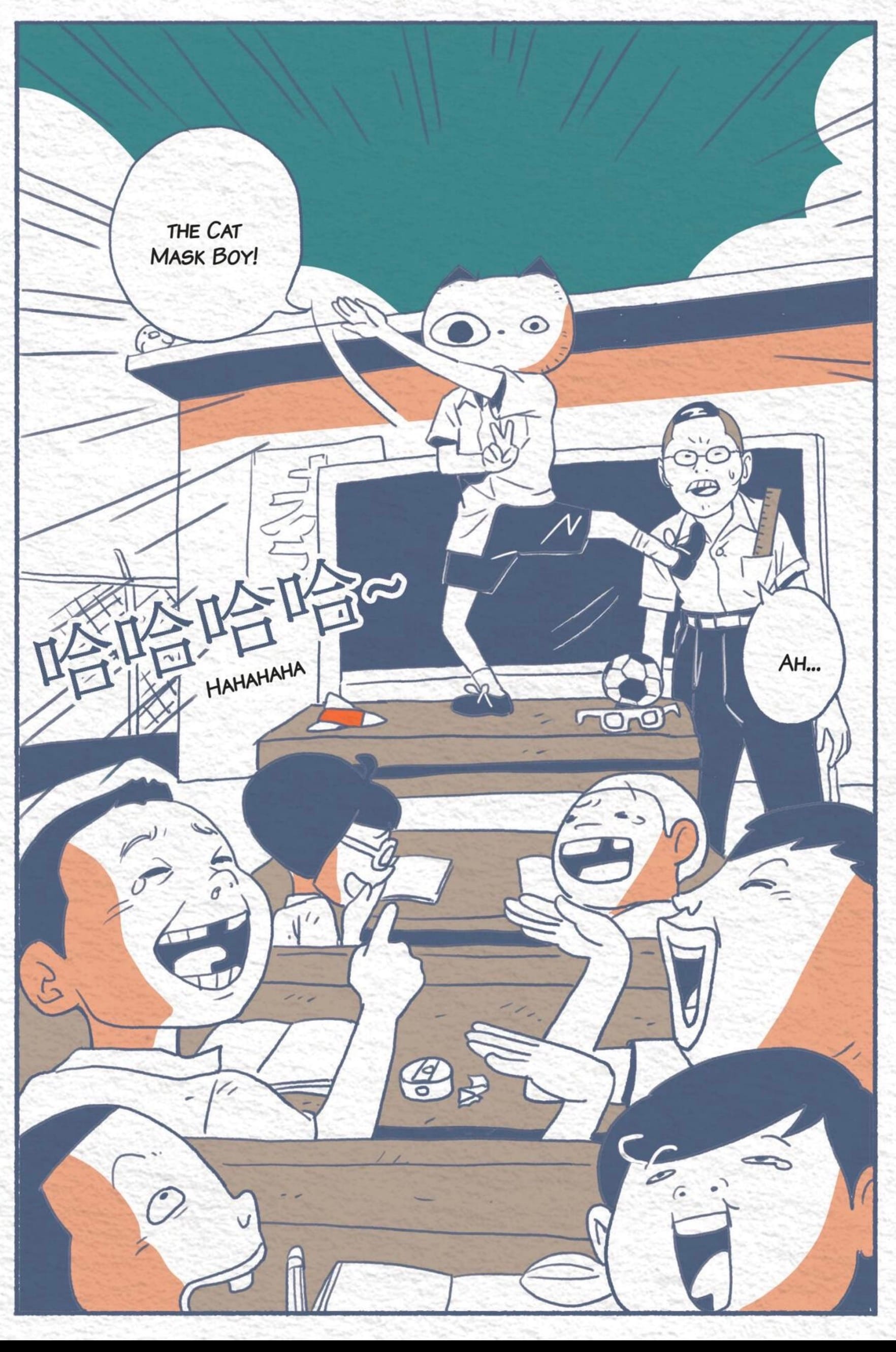
Using a limited color palette (largely warm brownish oranges and cool bluish green,) Liu mirrors the yin & yang of Dragon’s mask in the colors, often bringing these colors together in the same panels to create unity out of disharmony. If the color combination was used only once or twice throughout the book, it would be jarring and pull the reader in opposing directions. Using them as Liu does, he creates these warm and cool zones on the page and often in the same image. By limiting his colors to these ranges and repeating them throughout the book, he creates a unity showing that all the different spaces Tiger moves through aren’t all that different from one another. Maybe it’s the perception of a child but between home, school, and the Walled City, the colors bind them all together as spaces for Tiger and the other boys.
As he creates these spaces, Liu then shapes these boys through their actions. Tiger, Rocky, and Dragon are all young boys, not even fully formed yet. That’s part of the masks— Tiger imagining himself as a superhero. But that’s also part of how the masks function— these are boys still developing their identities. We never see Tiger or Dragon without their masks and we only briefly see Rocky before he gets his. As Liu is nostalgic for this period of life, he’s also wondering who we are when we’re 7 or 10 and who we will be when we grow up. Rocky is this kid that Tiger meets in the bad part of town but the mask means he’s a lot like Tiger. These boys are different but they’re also the same.
So Dragon becomes a guide for Tiger but he also represents the mystery of Kowloon Walled City. Is Dragon’s story a happy or a tragic one? Is he a good boy or a bad boy? He’s certainly not what Tiger expected to find in the seedy part of town. In the time that the two boys spend together (a good majority of this book,) maybe the idea that Liu wants us to come away with is that there are no “bad” boys. Dragon and Tiger are just boys and even the other kids that they meet in and out of the walled city are just kids. It’s not until we start to see the adults that we see anyone who’s truly good and truly bad. And even there, Liu shows us shading. Tiger’s mother is mean and stern when she needs to be but loving and tender when all Tiger really needs is a hug.
There were days during childhood that were full of endless possibility and that’s the nostalgia that Liu is remembering here. Cat Mask Boy is the story of a simpler time, before every kid had a cellphone or a traveling sports team to keep them occupied. Back in those days, kids were on their own. It wasn’t neglectful or hurtful or anything like that; it’s just the way it was and Liu spends time in this book reflecting on what that means and what we did with the days. Maybe we all didn’t have to take detours into dark and crime-ridden cities but was there anything really stopping us from doing that? Cat Mask Boy reflects on the days when it seemed like anything was possible and we were completely open to those possibilities.